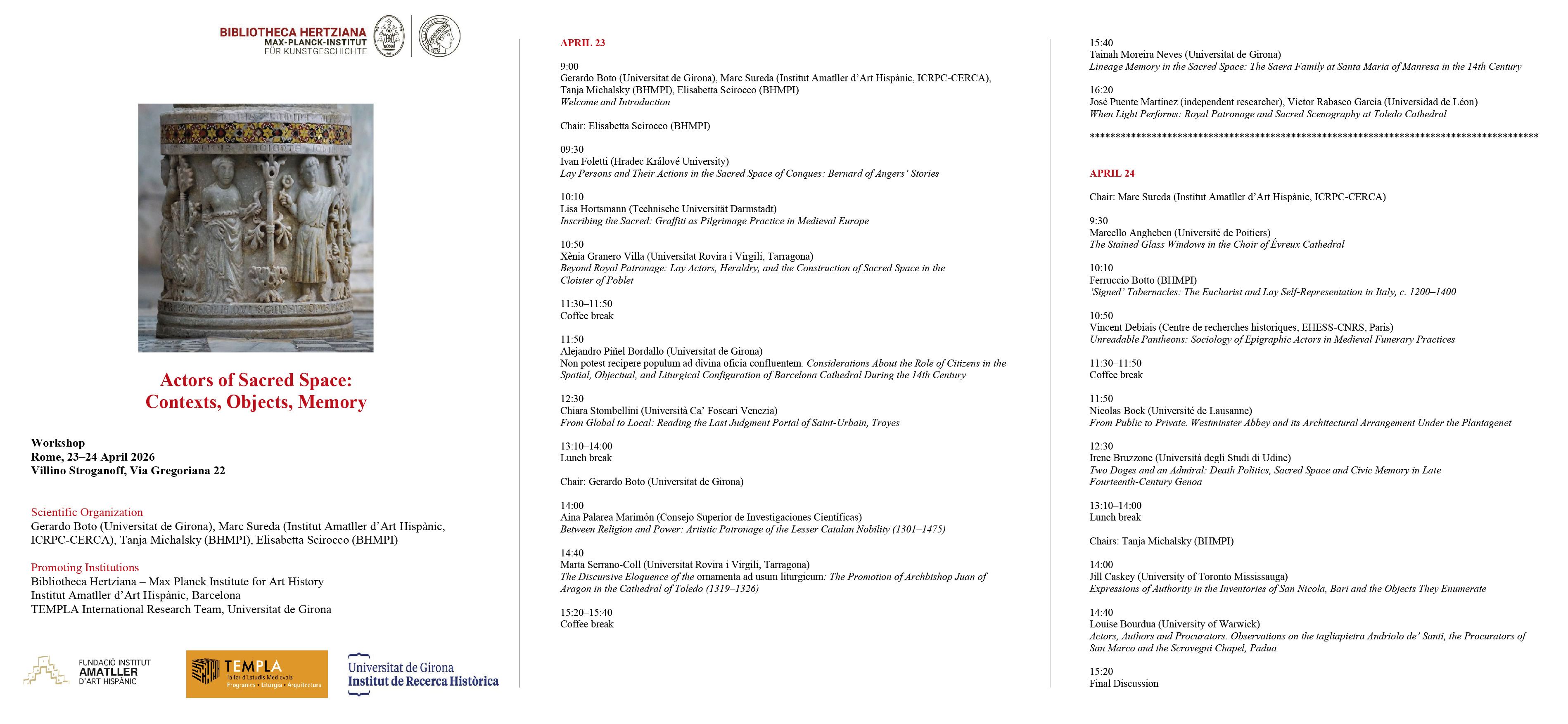
Actors of Sacred Space: Contexts, Objects, Memory (12th-14th c.)
Título
Actors of Sacred Space: Contexts, Objects, Memory (12th-14th c.)
Descripción
This workshop aims to explore the explicit or implicit material and artistic forms of intervention by particular actors, or specialized types of actors, within sacred spaces. This emphasis draws on the etymological link between the Latin actor and auctor, both words denoting protagonists–people who do things, produce, or bring into being. Disputed but blurred in medieval texts, including in the Speculum of Vincent de Beauvais (c. 1200), the term actor was broadly applied to “doers,” while auctor emphasized the original authorship and visibility of the work.
The workshop will focus primarily on lay people capable of creating or modifying sacred spaces and will prioritize underrepresented categories of social actors in historical and art historical studies. The historical geographic parameter is Christian Europe in the 12th–14th centuries.
We aim to explore the following thematic areas:
- Lay actors promoting and creating sacred spaces, objects, and furnishings, especially the instrumental manipulation of previous contexts and devices.
- Chapels, tombs, and funerary monuments in relation to social memory, social structures, and under considered types of actors.
- Actors and liminal spaces: liturgy, festive rituals, multifunctionality, and memory.